

Learn About – Coral Disease
Diseases occur on coral reefs as a result of increasing environmental stressors including land-based runoff exposing corals to poor water quality, pollutants and increasing nutrients. Low levels of disease in corals is normal, but when diseases increase on reefs it is a sign that corals are under stress. Several types of disease have been described and these descriptions are based on how the disease looks on the affected corals. Including
White Syndrome
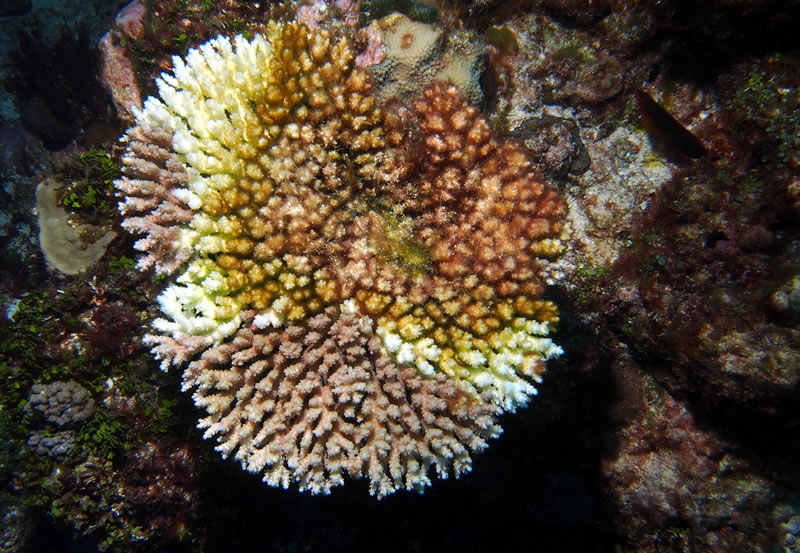
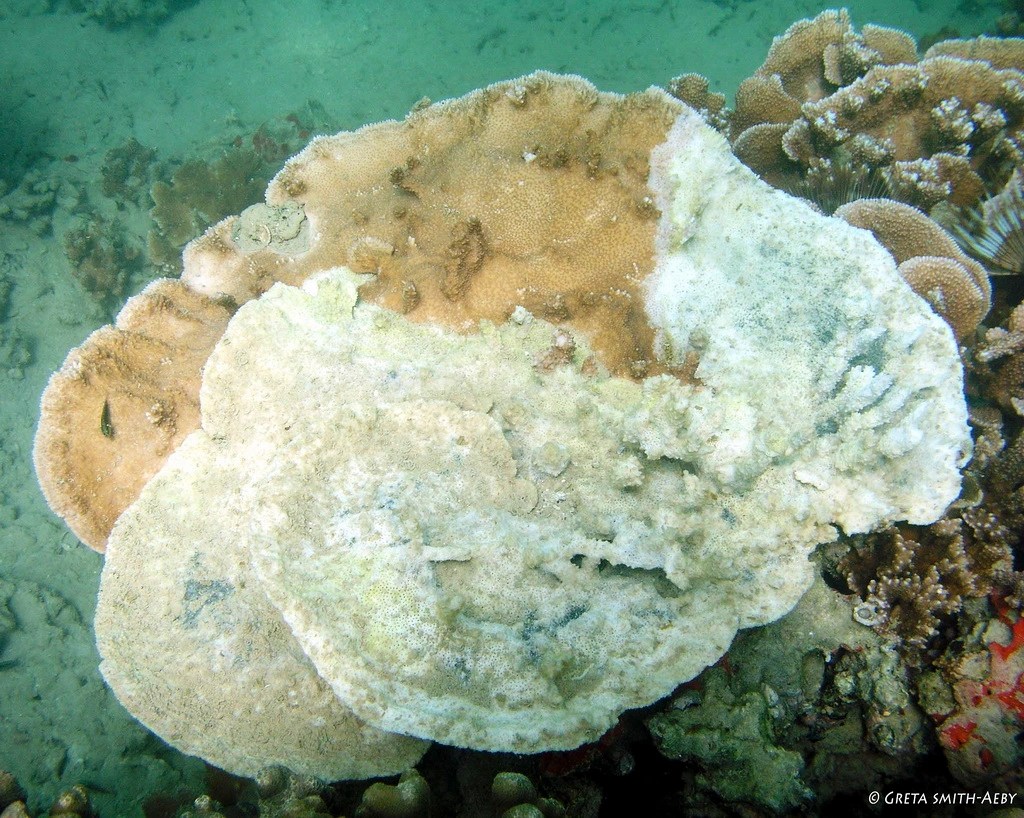
An outbreak of white syndrome looks like a bands of white spreading across the coral colonies and differs from bleaching in that it kills the coral tissue immediately and leaves the skeleton behind.

Black Band Disease
Black band disease is caused by a mixed microbial mat which appears as a black line or band on the coral colony. This is a very distinctive disease and is often linked to poor water quality.


Black Montipora Overgrowth
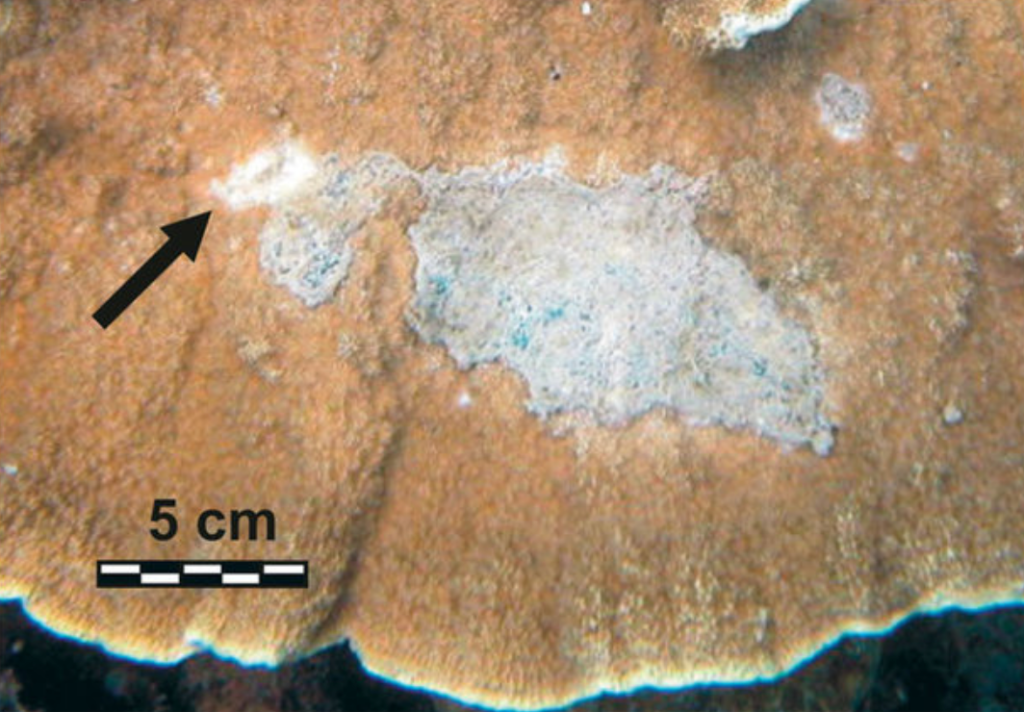
This disease is characterised by black or dark grey lesions (referred to as atramentous necrosis) and often accompanied by a white band, this has been described on plating Montipora corals on the reef generally in areas of sediment pollution and turbidity of the water column.


Growth Anomalies
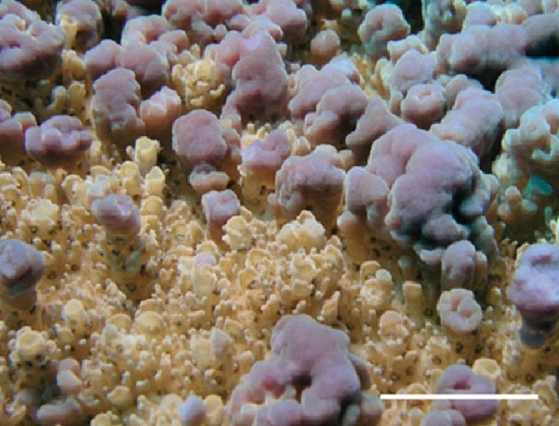
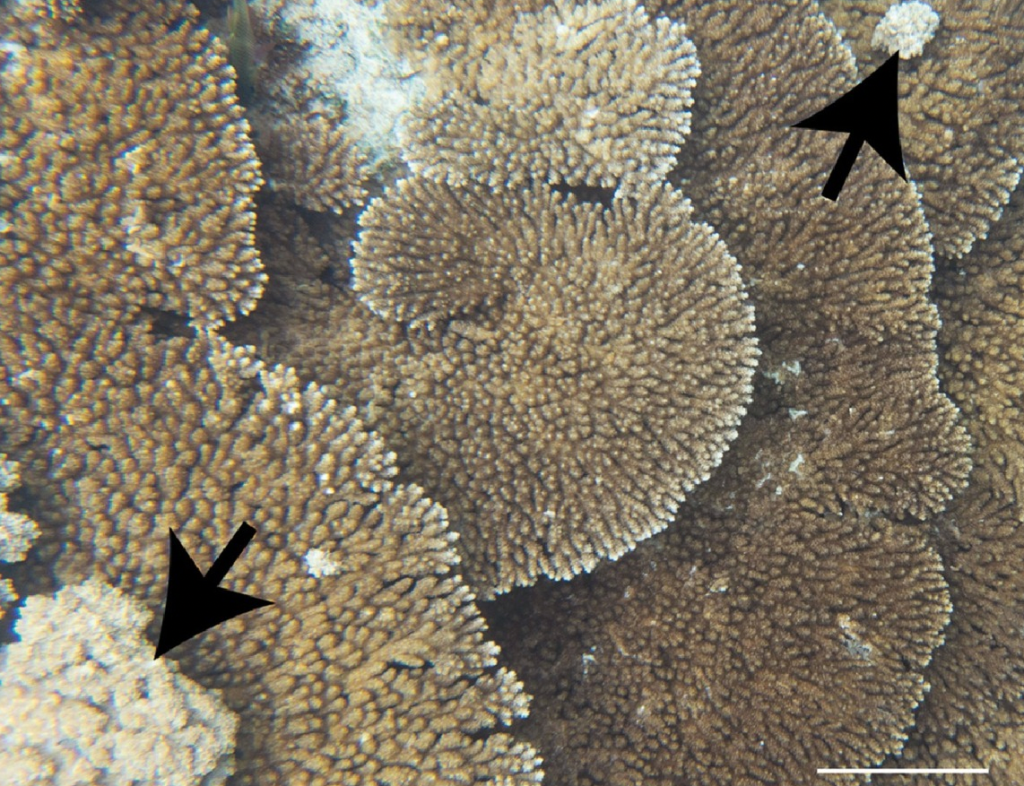
Growth anomalies resemble tumors or neoplasms, and are visible as areas of unusual growth of the coral, lumps, and protruding shapes from the surface of the coral. The lumps can be white, brown, purple/blue/pink or even the same brown colour as the rest of the colony.
White Spots
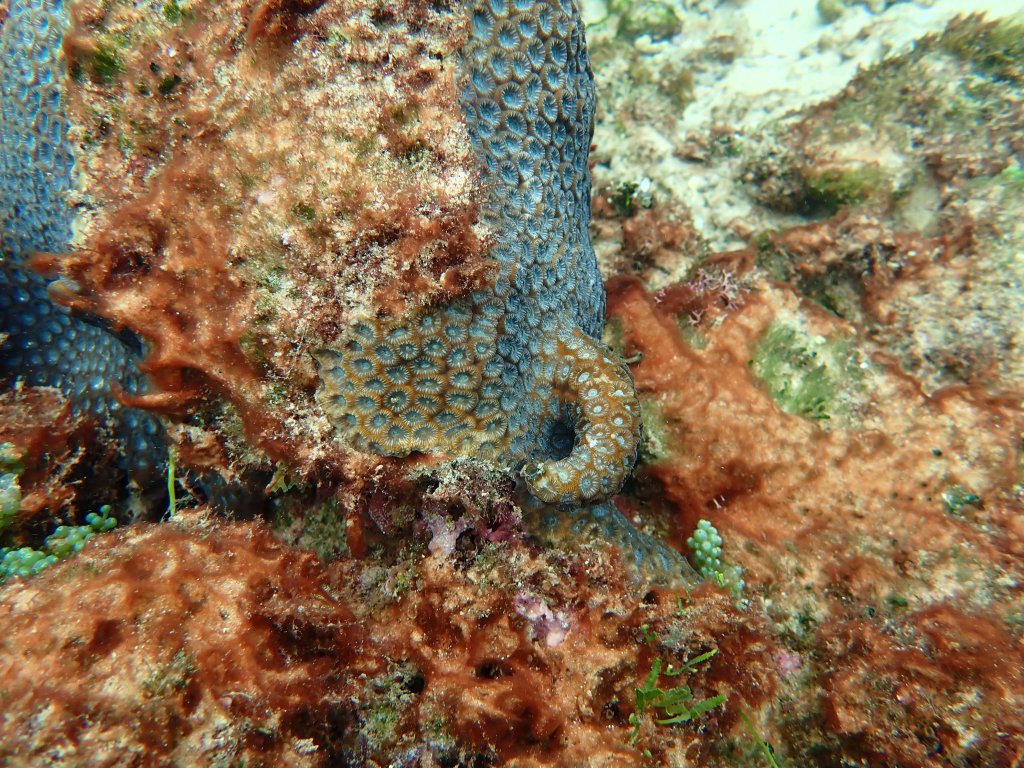
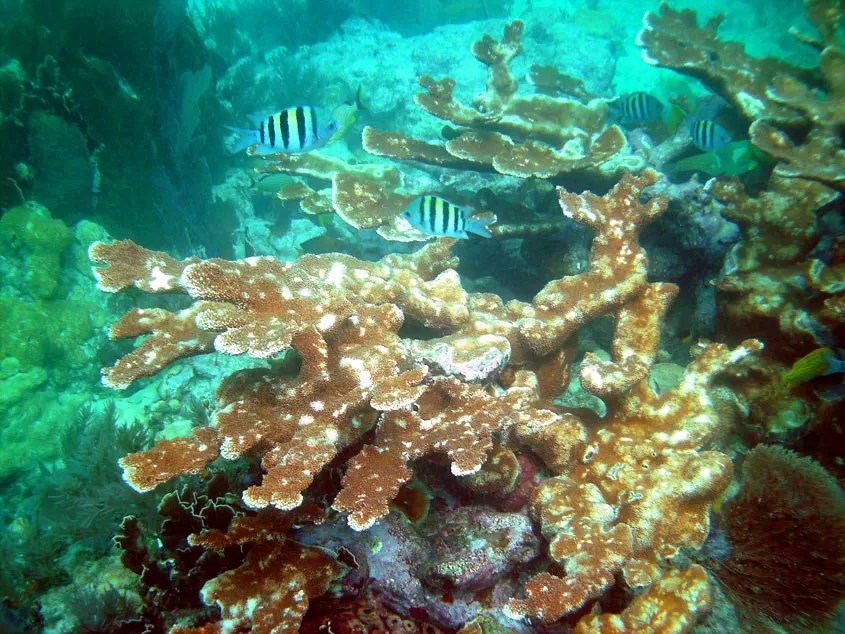
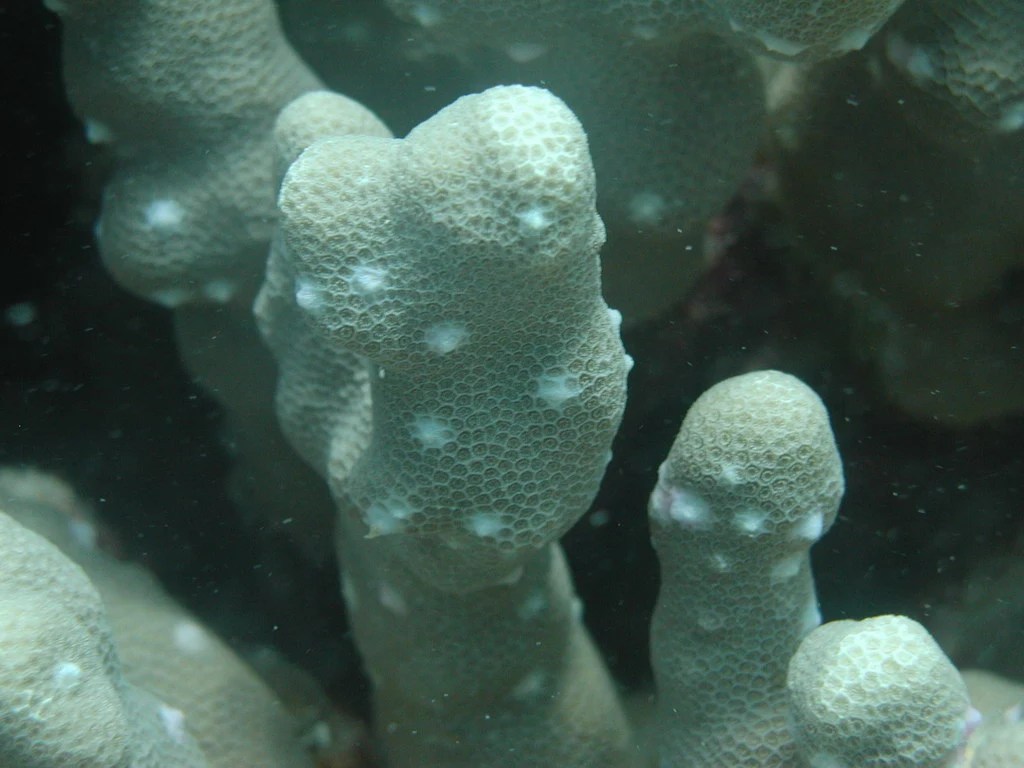
White spots are irregular white patches or blotches on corals that result from a loss of coral tissue.

 Coral Reef Health