

Learn About – Disease in Other Organisms on Coral Reefs
Other organisms on the reef, including fish, urchins, sea cucumbers and even turtles can be impacted by diseases and disease outbreaks. Disease outbreaks in other organisms are also linked to stressors in the environment including poor water quality.
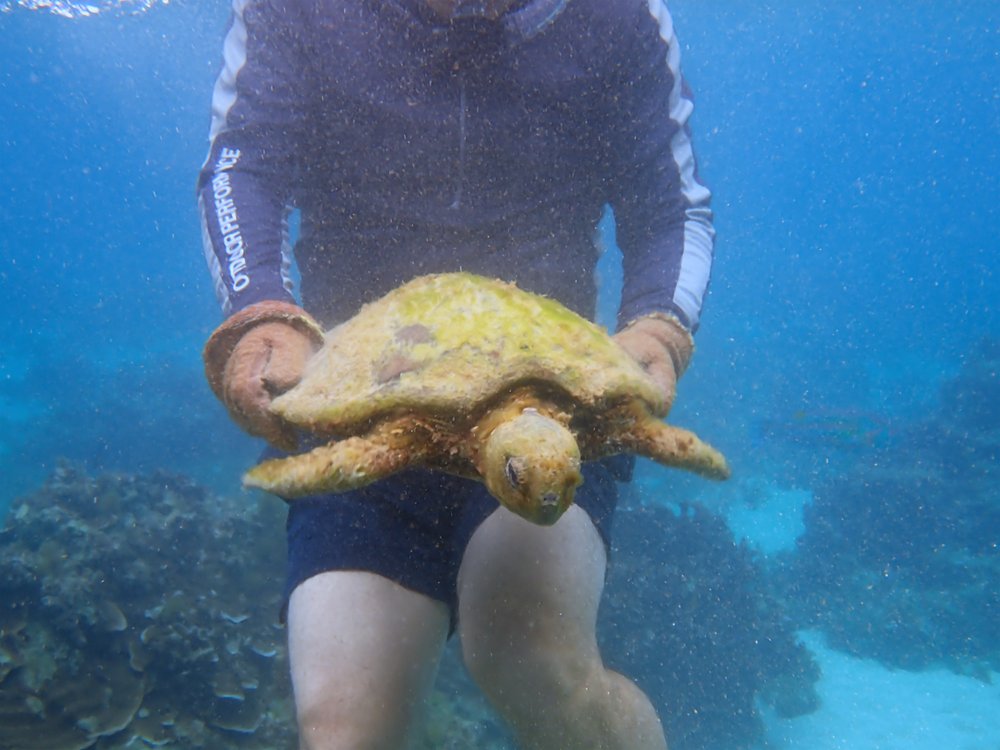
Turtles can be affected by changes in their environment, accidental capture, consumption of plastics, and many other factors. Several sea turtle rehabilitation facilities exist, including the following:
Cairns Turtle Rehabilitation Centre
Dolphin Marine Rescue – Coffs Harbour
Australian Seabird and Turtle Rescue – NSW
Photo by Susan Prior – diseased turtle in Emily Bay

Tropical fish are also impacted by a number of diseases, including bacterial and fungal infections. In addition, muddy waters from rain and runoff can increase disease rates in fish and damage their gills. Common signs of disease are white spots, discoloration, and paling.
Fish disease on the Great Barrier Reef
Photo shows a tropical fish affected by discoloration and likely diseased

Sea cucumbers can also be affected by virulent bacteria and develop skin ulceration when diseased. This first appears as a white spot that quickly spreads across the entire individual. Sloughing-off of tissue can also indicate disease.
Biotic diseases in sea cucumbers
Photo by Kathleen Reed – wasting disease in sea cucumbers
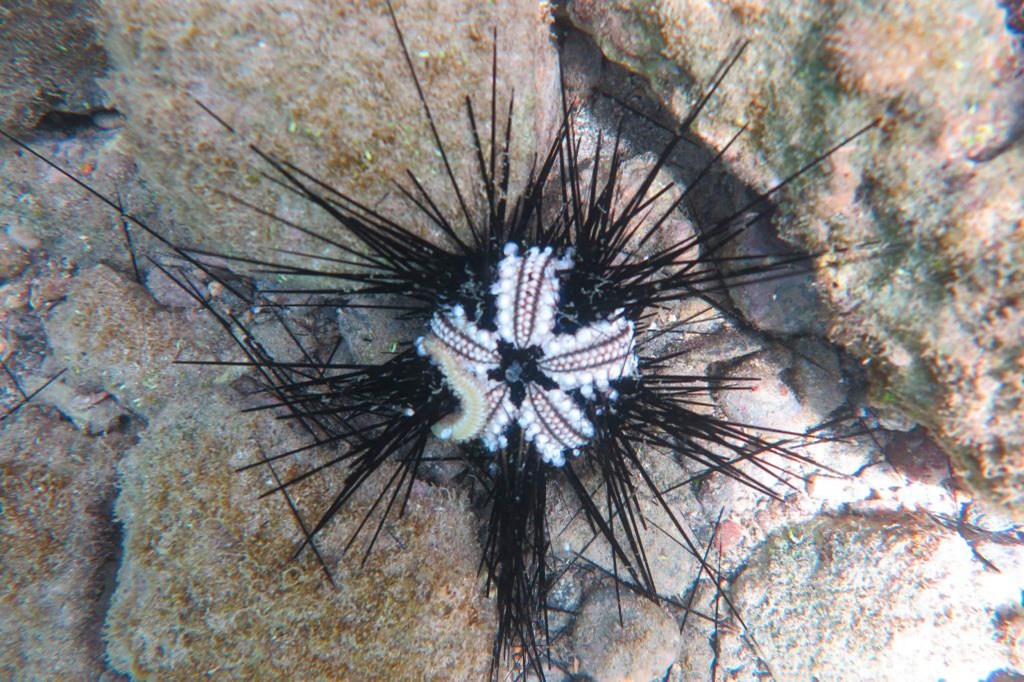
Sea urchins can be affected by pathogens that can cause mass die-off and lead to a greater abundance of algae on the reef. Signs of sea urchin disease include droopy spines, white skeletons poking out from their bodies, loose spines on the reef floor, or sea urchins floating in water where they would normally be anchored to the reef. Similar to corals, urchins can also get black spot or wasting disease.
Sea urchin die-off in the Caribbean (2022)
Mysterious sea urchin death in the Caribbean (2022)
Photo by Kimani Kitson-Walters, showing sick urchin shedding spines
 Coral Reef Health